
Take a proactive approach to roof inspections, preventative maintenance, and protecting your commercial property.
For commercial property managers, a roof is one of the most important—and often overlooked—components of a building. While roofing systems are designed to withstand years of exposure to the elements, neglect over time will develop into costly problems when left unaddressed. Routine roof inspections are a small investment in long-term building and operations stability. A commercial roof inspection checklist ensures continuity and quality over time.
A roof leak can disrupt tenant operations, damage interior finishes, compromise equipment, and create unexpected maintenance expenses. In Minnesota, where commercial roofs endure heavy snow, ice, temperature fluctuations, and severe summer storms, staying ahead of potential roofing issues is especially important.
Why Commercial Roof Documentation Matters
According to the National Roofing Contractors Association (NRCA), planned roof maintenance is an important part of managing roofing systems and protecting their long-term performance. Rather than treating roofing as an emergency expense, property managers can incorporate it into a predictable building maintenance strategy.
A well-maintained inspection record can help property managers:
• Preserve material and product warranties criteria.
• Identify visible deterioration before it develops into a larger problem.
• Track recurring issues and previously completed repairs.
• Provide building owners with clear, documented maintenance recommendations.
• Support annual maintenance budgets and long-term capital planning.
• Improve communication between maintenance teams, tenants, and roofing contractors.
• Evaluate whether repairs, preventative maintenance, or eventual replacement may be appropriate.
CENTRAL TAKEAWAY: Routine inspections performed by qualified roofing professionals help establish a reliable picture of a roof's condition over time. Documenting those findings based on a commercial roof inspection checklist provides property managers with valuable information about maintenance needs, recurring concerns, and potential repair priorities.
What Should Be Included in a Commercial Roof Inspection Record?
A useful roof inspection record doesn't need to be complicated. It does, however, need to be consistent. Whether your property management team maintains digital records or works directly with Central Roofing Company, the following information should be documented during each inspection.
1. Inspection Date and Weather Conditions
Record the date of the inspection, recent weather conditions, and any history of significant storms that may have affected the building.
Heavy rainfall, hail, strong winds, and freeze-thaw cycles can contribute to roofing damage. Recording these conditions provides valuable context when evaluating changes in roof performance and potential remediation or repair recommendations.
2. Roof Areas Reviewed
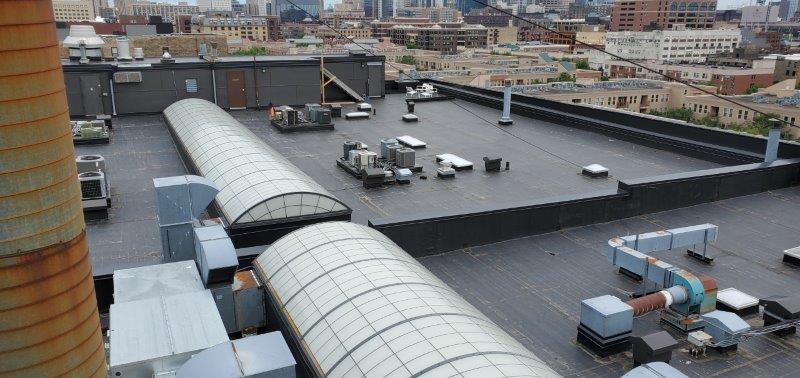
Commercial roofs often include multiple sections, elevations, drainage systems, and equipment locations.
Identify which roof areas were inspected. Make notes of roof areas not evaluated during the inspection. A roof plan with labeled sections can help ensure that future inspections follow the same documentation format.
3. Visible Roofing Damage or Deterioration
Qualified comnmercial roofing service technicians document observable conditions such as:
• Open seams, punctures, or tears in the roofing membrane.
• Blistering, cracking, or other signs of material deterioration.
• Loose or damaged flashing.
• Areas of standing water or evidence of recurring ponding.
• Damaged roof edges or perimeter components.
• Previously repaired areas that may require additional attention.
Not every visible condition indicates an active leak. However, recording changes over time helps roofing professionals determine whether additional investigation or repairs are necessary.
4. Drains and Drainage Areas
Proper drainage is essential to commercial roof performance.
Inspection records should note the visible condition of roof drains, scuppers, gutters, and surrounding areas. Debris accumulation, blocked drainage components, and evidence of standing water should be documented for professional evaluation.
5. Roof Penetrations and Equipment
HVAC units, vents, pipes, skylights, and other rooftop installations create transitions, or "penetrations," in the roofing system that require careful attention.
Document the condition of visible flashing and seals around these features, along with any recent equipment installations or maintenance work.
6. Interior Signs of Moisture
Roof documentation shouldn't stop at the roof itself.
Property managers should also record visible interior conditions that may indicate moisture intrusion, including ceiling stains, damp insulation, peeling paint, water-damaged finishes, or recurring moisture near walls and windows.
These observations can help roofing professionals investigate potential sources of water intrusion, although an interior stain does not necessarily mean the roof is responsible.
7. Organized Inspection Photos
Photos play an important role in each element of a professional roof inspection report. Photos are proof of inspection for property owners and managers. They are a record of roof conditions and work or repairs perforned during the inspection. Over time and multiple inspections, photos also serve to depict how the roof itself and repairs performed have weathered.
8. Professional Recommendations
The detailed inspection report provided by Central Roofing Company includes Good - Better - Best next steps. Commercial Roofing Project Managers walk clients through their options, budget considerations and scheduling. We create solutions that work.